I build websites for a living. This page tells you how to build one without me, properly, for about $450 a year. No email required, nothing to sign up to, no catch.
Use Squarespace. It is the right trade when you are doing this yourself. You buy a template, swap the photos and the words, and it looks finished. Booking, a mailing list with proper subscribe and unsubscribe, forms and payments are all built in, with nothing to configure and no plugin to keep updated.
It gives you fewer choices than the alternatives. That is the feature. Every choice a builder offers you is a decision you have to make and an afternoon you do not get back.
Far more control than you need, and the moment you nudge a template it tends to come apart. Putting it back together is exactly the time you were trying to save.
It is the most capable of the lot and it will happily eat your weekends. Plugins, updates and security are now your job, forever. Wonderful with a developer, punishing without one.
The first draft looks brilliant. Six months later something breaks and you cannot read the code. Worth it if you already write software, a trap if you do not.
An annual plan is normally about 25 percent cheaper than paying monthly, and it is the same product. Ask what discounts are going before you put a card in.
Who you help and what you do, in one sentence, before anyone has to scroll.
The story, and why you exist. This is the page people actually read before they call you.
Your services or programs, described plainly. One short paragraph each is plenty.
A live calendar if you take appointments. Otherwise a form that lands in your inbox.
One button, one amount field, if you take money on the site. Every extra step here costs you money.
A form, not just an email address on the page. Addresses get harvested by spammers.
Required the moment you collect an email address. Your platform has a template for it.
Resist adding more. A small site that is finished beats a big one that is half written, and every extra page is another thing you have to keep true.
This is the part almost every self built site gets wrong, and it is the part that costs you visitors. None of it needs a developer. All five are settings inside your builder, and they take an afternoon between them.
Builders ship new sites hidden from search so your half built draft does not leak, and people forget to unhide them. Find the setting, switch it on the day you go live. If this one is wrong, nothing else on this list matters.
Not the default the template gave you. These two lines are what Google puts in the results, and they are what ChatGPT, Gemini and Perplexity read when someone asks about a service like yours. Say what you do and where you do it.
Without it, every link you share to Facebook, WhatsApp or LinkedIn arrives bare, with no picture and no headline. It looks broken, and people do not click things that look broken.
Name, location, contact, opening hours, the areas you serve. Your builder turns this into the structured data that search engines and AI assistants quote back when they name a business. Leave it blank and you are invisible to them, however good the site looks.
One short line per photo saying what is in it. It helps search understand the page, and it means somebody using a screen reader can actually use your website. Both reasons are good ones.
When you are done, run your address through my free checker. It scores any website on both normal search and AI search, it takes about thirty seconds, and it does not ask for your email. It will tell you whether the five above actually landed.
About $20 to $35 a year, bought in your own name.
About $300 to $420 a year. Pay yearly, never monthly.
Nothing to $100, once, and only if it is not already included.
Nothing to $110 a year, depending on who you use.
First year, all in: about $450.
If someone quotes you thousands to set up a do it yourself site, they are charging you for labour you already said you would do.
Never let a builder, an agency or a helpful friend hold it for you. If they hold it, you cannot leave, and that is how people end up stuck paying someone they no longer like.
A spreadsheet on your own computer, every few months. The list is the one asset your platform cannot replace for you if something goes wrong.
Buy one year, see how you go, keep the rest of your money where you can still spend it on something else.
Buy the domain first. Start the platform trial second. Pick the template third. Then write all your words in a plain document before you touch the design, because writing first is the thing that saves the weekend. Publish at seven pages, and do the five settings in step three on the day you go live, not later.
In your own name, before anything else gets decided for you.
One platform, one trial. Do not open four tabs and compare.
Choose the one closest to finished, not the one easiest to change.
Plain document, all seven pages, before you touch the design.
Go live at seven pages, and do the five settings the same day.
Not here to talk you out of it. They are here so you can see what finished looks like, and steal the structure for your own. Every one is a real business, and the bones under all of them are the seven pages in step two.
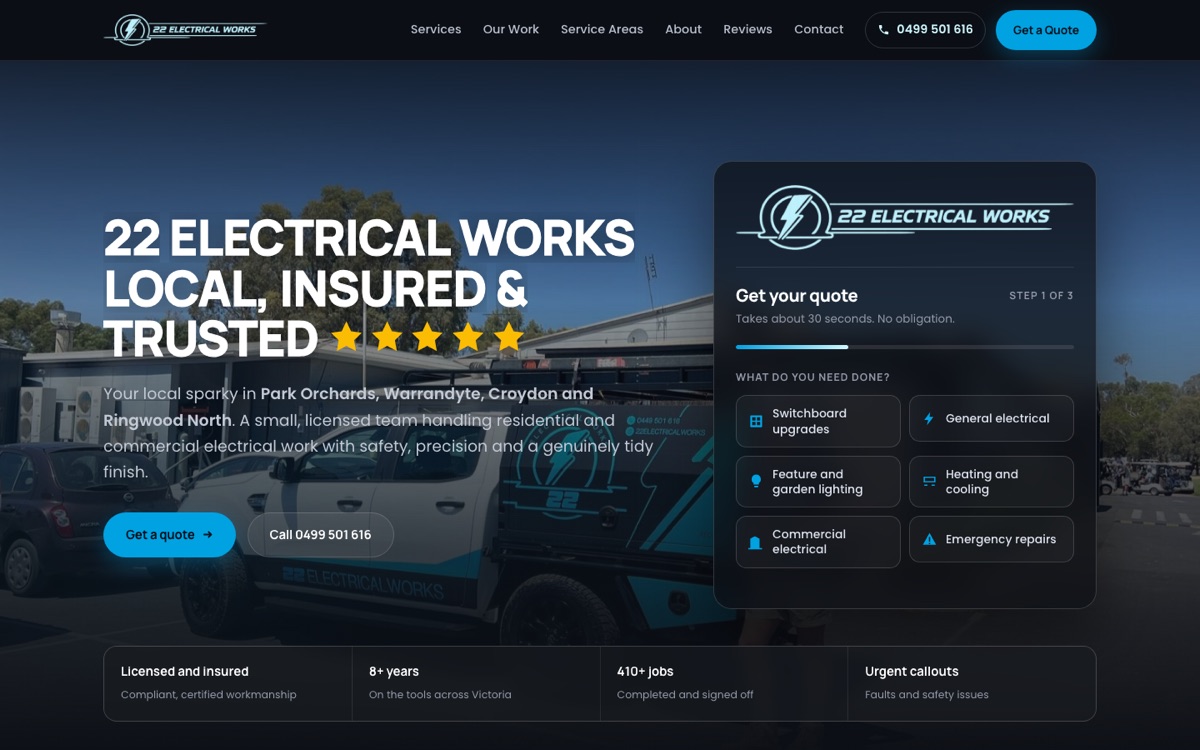
A 28 page electrician site with a three step quote form and a live feed of real completed jobs.
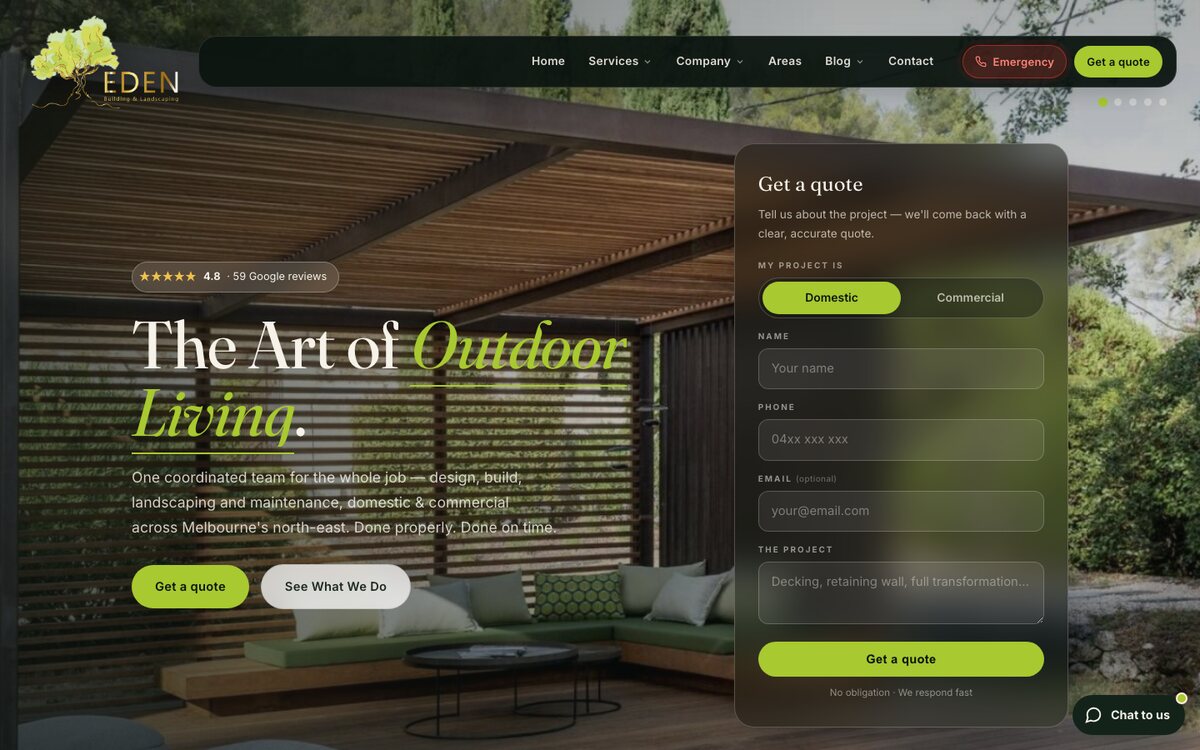
Full website, dual domestic and commercial quote flow and a live client dashboard.
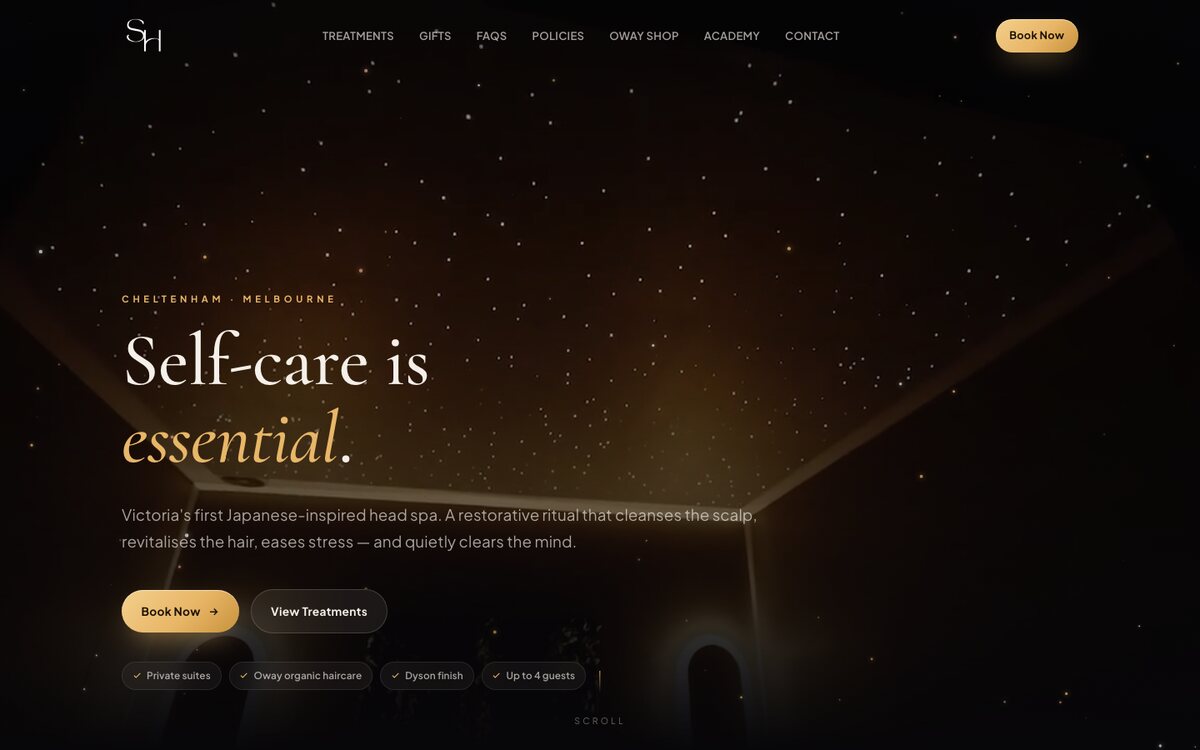
A serene website for Victoria's first Japanese inspired head spa treatments, gifts and booking.
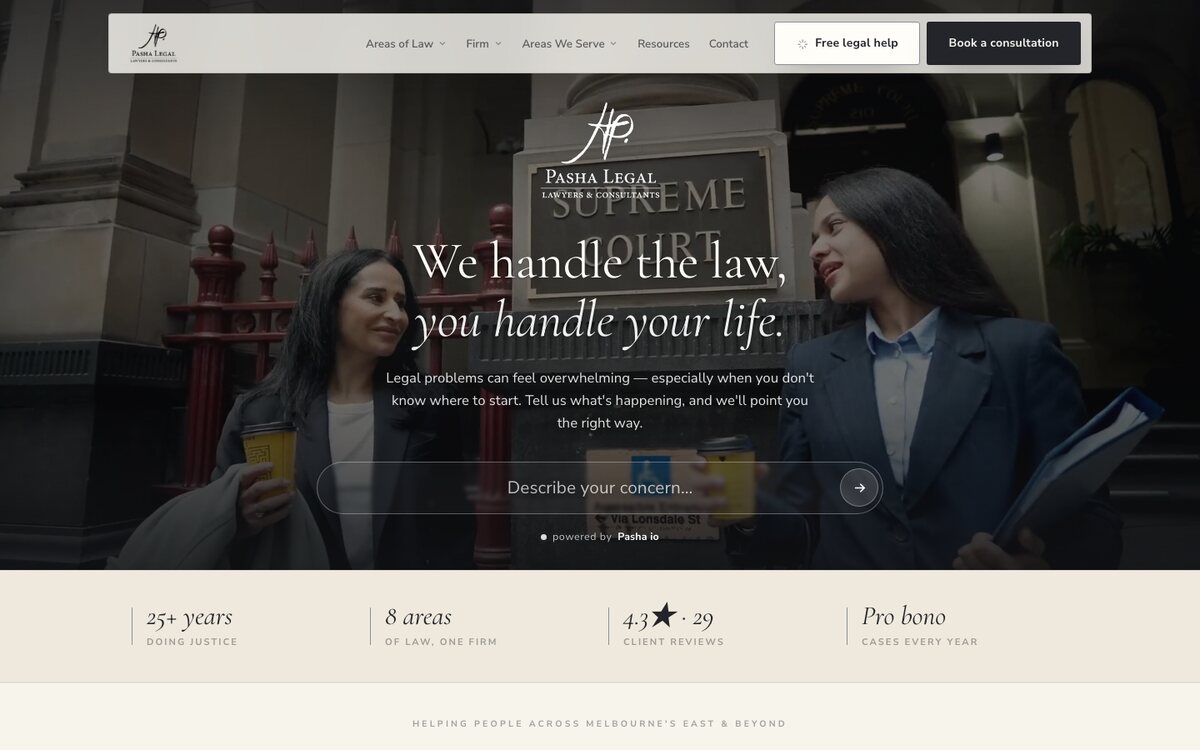
A warm, plain language legal site with intake, consultation booking and a court form system.
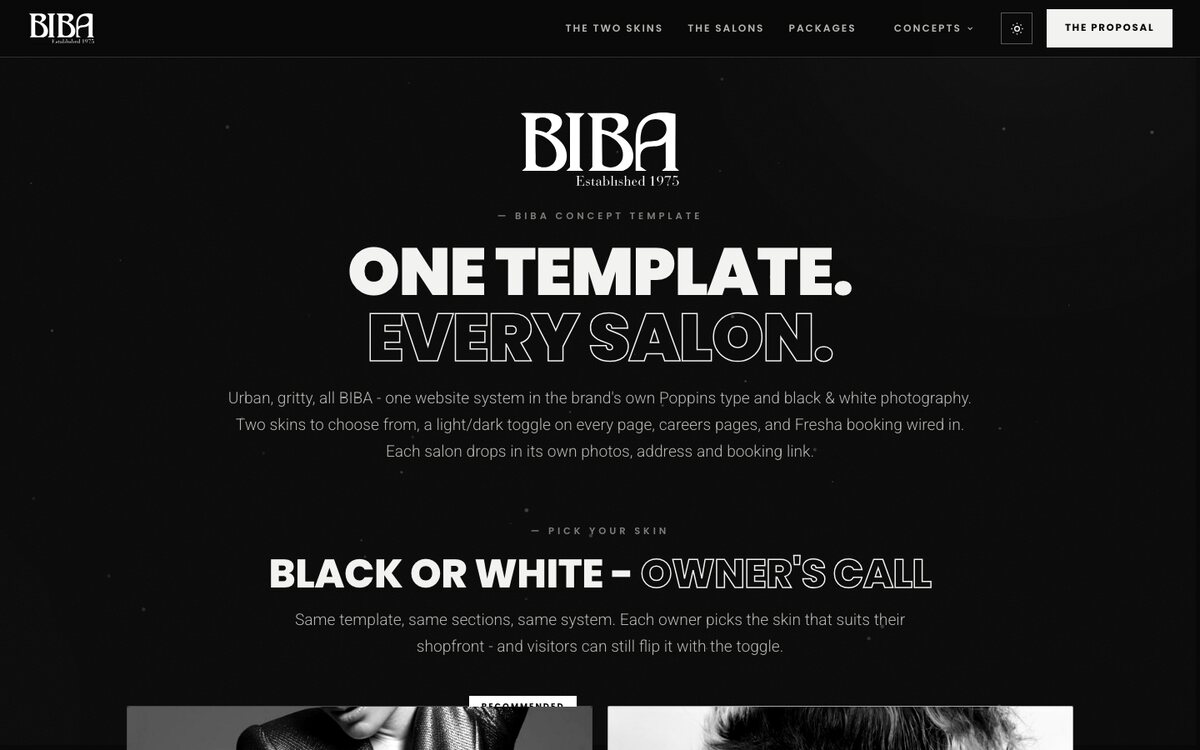
A flexible salon website system with a light and dark toggle and built in online booking.
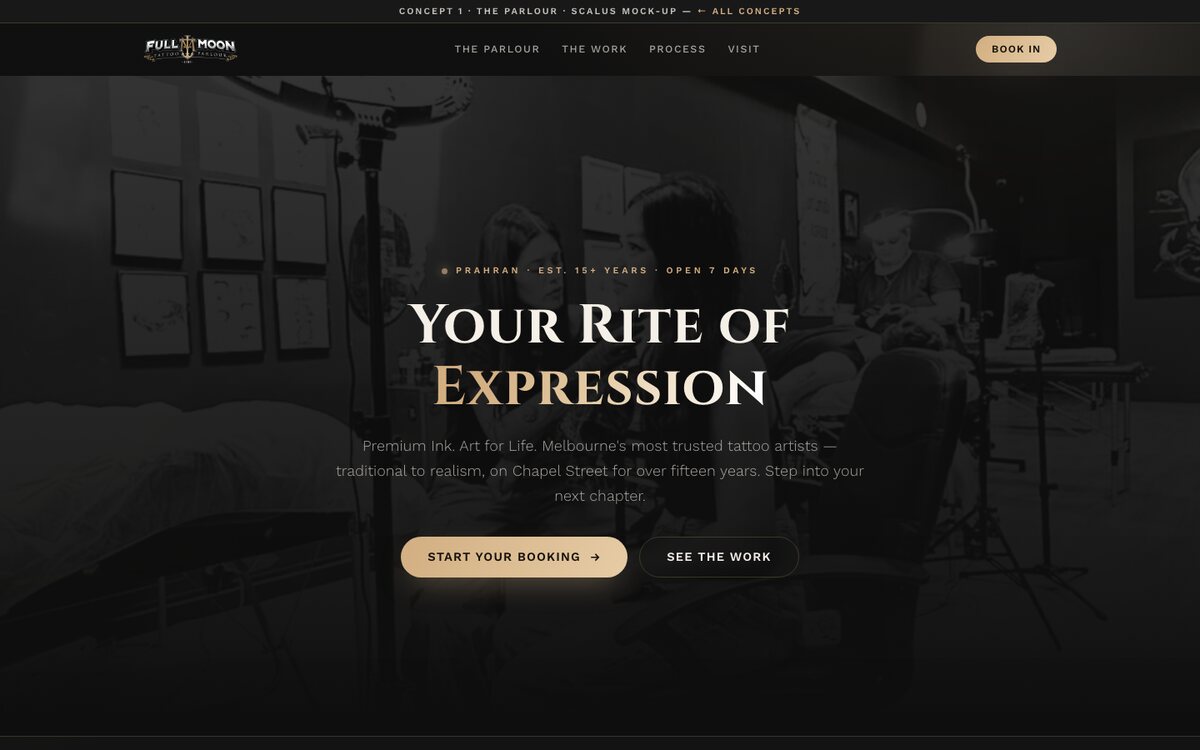
A dark, gallery style site that treats tattoos as art and books custom sessions.
Everything above works. Plenty of businesses run happily on a site they built themselves, and I would rather you did that well than paid me badly.
It stops being the right call when the website is how you get customers. Then the question is no longer what it costs, it is what it earns, and the weekends you spend fiddling with it are weekends you are not working. If you get to that point, that is what I do, for $225 a month, and you can ring me about it.
Plenty of people cannot afford a monthly plan, and plenty simply would rather not pay one. Both are fair. Most of what makes a website work is knowledge rather than labour, so I wrote the knowledge down instead of sending people away with nothing. If you have more time than money, this page is the better deal for you.
Squarespace, if you are building it yourself. It gives you fewer choices than the alternatives, which is the point. Booking, a mailing list with proper subscribe and unsubscribe, forms and payments are all built in, and the templates hold together when you edit them.
About $450 for the first year in Australia. Roughly $25 for the domain, $300 to $420 for an annual plan, nothing to $100 for a template, and nothing to $110 for email on your own domain.
You can, and the first draft will look impressive. The trouble comes six months later when something breaks and you have no idea what the code does. If you already write software, go ahead. If you do not, a template you can edit on a Sunday afternoon is worth more than clever code you cannot maintain.
Only if you switch on the five settings in step three. Builders ship new sites blocked from search and most people never unblock them. Structured business details and a real page description are what Google and the AI assistants read when they decide which business to name.
Yes. Ring 0468 085 444 or email hello@scalus.app. If it is a quick one I will just answer it, and there is no charge and no catch for that.